
 This morning I listened to a pleasing report on BBC Radio 4’s Today programme, about a neuro-scientific experiment to observe a pianist’s brain activity while he played the piano.
The leader of the ‘Glass Brain’ study commented that playing the piano is one of the most complex brain activities. As pianist Nicolas Namoradze played, they could see many areas of the brain ‘lighting up’ and connecting with one another in lively, swirling patterns across the whole brain.
The pianist himself said it was fascinating to see his own brainwave activity as it related to different parts of the piece he was playing and what he was doing at the time – thinking and planning, attending to sound, differentiating between musical layers, using his memory, feeling emotionally involved, directing his fingers in complex patterns, and so on.
As the neuroscientist pointed out: these are all skills we all use in daily life at one time or another, but there are not many activities which require their simultaneous use. It seems to be this simultaneous use which is satisfying for the brain.
I found this very cheering. Often, when you’re playing the piano, especially when playing music you love – music that has taken time to learn, master and digest – you do feel you’re engaged in an activity beneficial to the brain, but it is nice to know that neuroscience is coming to the same conclusion.
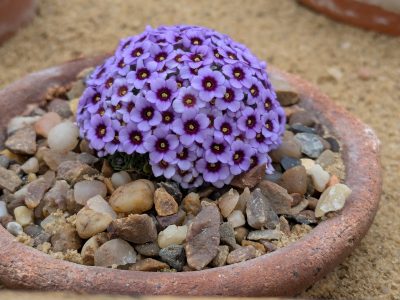
Yes, I do realise that my photo of purple Alpine flowers looks like a small and happy brain!


0 Comments