
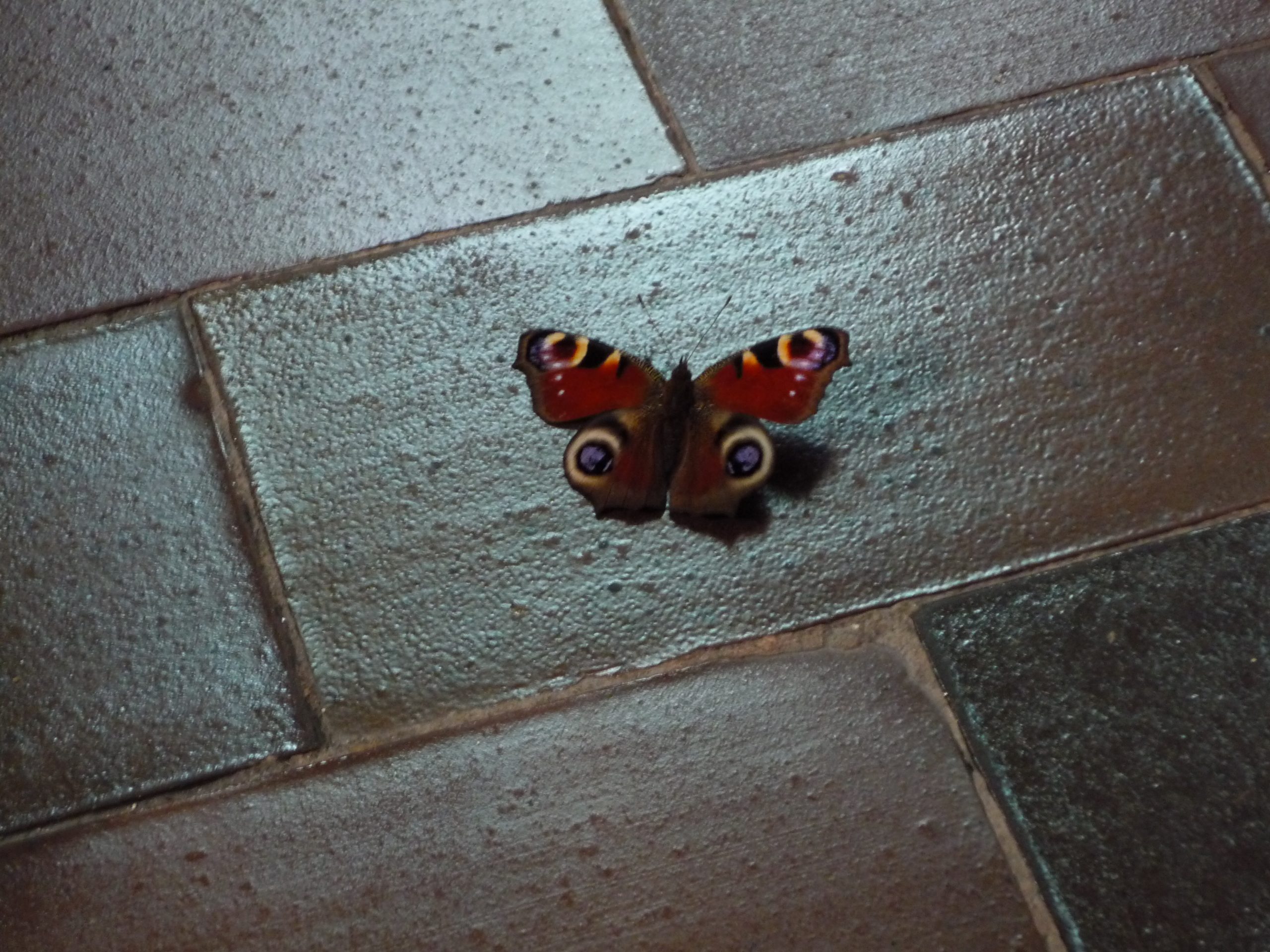
 I’ve been practising Schumann’s ‘Papillons’, a cycle of piano pieces containing various motifs and references which reappear in his later piano music. It seems that for Schumann, butterflies were associated with the novels of Jean Paul, one of his favourite authors, who often wrote about the soul’s struggle to resolve its identity. In fact, the link between butterflies and souls goes back at least to the Ancient Greeks. Psyche, goddess of the soul, was often portrayed as having butterfly wings. I believe that other cultures have also linked butterflies and souls.
So it’s not surprising that butterflies have appealed to composers. In Schumann’s case they seem to be some sort of code for little motifs which come and go, appear here and there, turn upside-down and backwards if they want. One of Grieg’s best-known piano pieces is called ‘Butterfly’. Ravel wrote his piano piece ‘Noctuelles’ about night moths. Poulenc has a piano piece called ‘Phalenes’, another kind of moth. More recently, Harrison Birtwistle has written a ‘Moth Requiem’ inspired by Robin Blaser’s poem about a moth trapped inside a grand piano. It’s a curious thing that all these butterflies and moths should be associated with the piano, on the face of it too percussive an instrument to evoke these mysterious creatures.
Butterflies, starting life as caterpillars, represent the possibility of transformation. What could be more magical than something which begins as an earthbound, slow, crawling creature and ends as an airborne scrap of colour and beauty? I’ve read that the butterfly is the only creature which changes every cell in its body when it transforms itself inside the chrysalis. The DNA of a caterpillar, it seems, is wholly different from that of a butterfly. No wonder this unique process has inspired composers to take simple cells of music and give them new identities.
But why did Schumann use the French word ‘Papillons’ for his piano pieces? He wasn’t French. Why not use the German word? It’s a bit of a mystery, but it seems that in Jean Paul’s ‘Flegeljahre’ there’s an important chapter about a Masked Ball which made a great impression on Schumann. The German word for a masked ball is ‘Larventanz’, and ‘Larven’ can mean not only masks but also larvae, or butterflies-in-waiting, a play on words which doubtless appealed to the author as he made his characters mistake one another’s identities. ‘Larventanz’, though, perhaps isn’t the prettiest of words. Maybe Schumann just liked the sound of ‘Papillons’ better than the sound of ‘Larven’, or preferred it to the brittle sound of ‘Schmetterling’, the German word for butterfly. Maybe he wanted to conceal a direct link to the novel. Or maybe when he swapped from German to French he simply made a graceful sideways hop and a skip to another part of the forest.



0 Comments