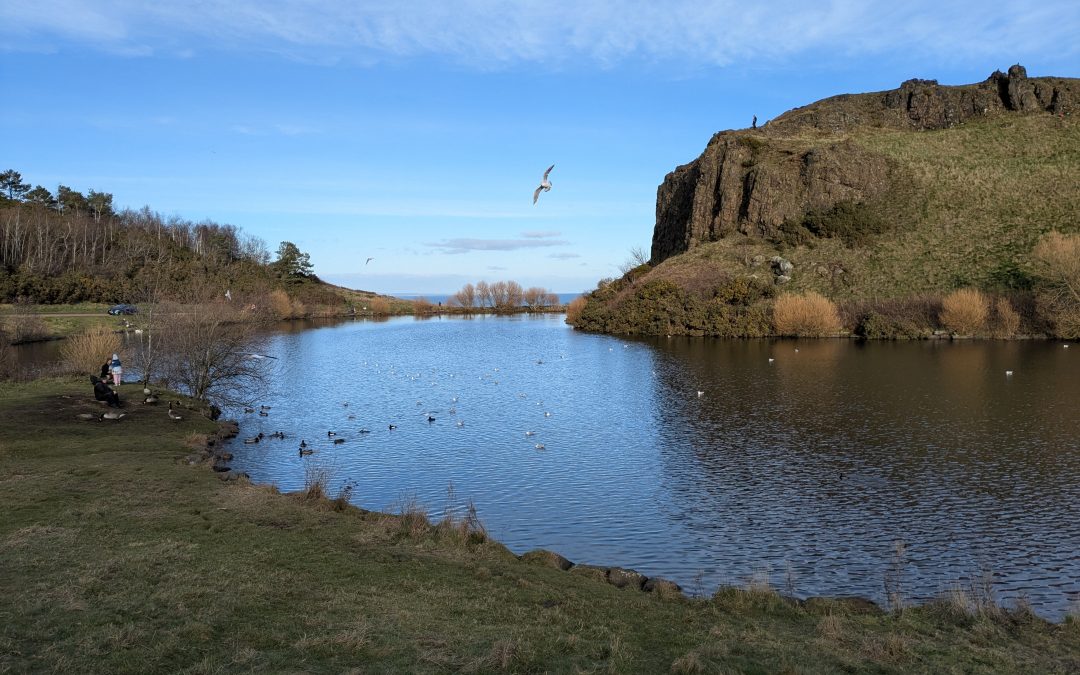
I learned something the other day when visiting the Hunterian Art Gallery in Glasgow. In one of the rooms, there was an explanatory sign (see photo) about the word 'canon', meaning a collection of works recognised as being of enduring value and importance. I had never...
Get The Latest Posts
Interested in what Susan has to say about all things classical music? Subscribe below and whenever Susan writes a new blog post you will be notified by email. Simple!
Reading books, reading music
They were talking on the radio about the good things that reading can do for your brain. Reading a book, that is, as opposed to scrolling through social media. When you read, you read one word at a time. Your brain tries to guess the next word. the interaction between...
Fading before the end of the story
I've finished reading several novels I received as Christmas presents. All were enjoyable, but at least two of them seemed to run out of steam before the end. I won't say which they were, because it doesn't seem fair to books which were very well written overall, but...
Edvard Grieg and Shakespeare’s Macbeth
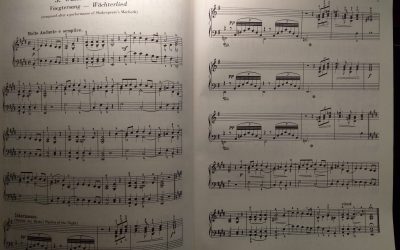
It's been a turbulent week, and I have found some distraction in playing through a volume of Grieg's Lyric Pieces. I've always liked them, though I admit I knew only the more famous pieces, and only recently discovered that there are many more - all worth getting to...
Musicians fighting for their jobs in an age of recorded music
At last there is more commentary about the challenges facing freelance artists. Yesterday there was a strongly-worded cry for help in The Observer from several leading musicians, warning that if the UK's musicians are not supported, we could lose them for ever. I have...
Fatima, and an excerpt from ‘J is for Job (not a proper)’
In response to yesterday's outrage about an HM Government ad showing 'Fatima', a young ballet dancer as an example of someone who might switch to 'working in cyber', I'm posting an excerpt from 'J is for Job (not a proper)', from my book A Musician's Alphabet (Faber,...
‘Adapting to the new reality’
So the UK Chancellor, Rishi Sunak, has suggested that musicians and other creative artists may need to re-train and look for other opportunities as a result of the coronavirus pandemic. “I can’t pretend that everyone can do exactly the same job that they were doing at...
Re-classifying music as ‘hospitality’
Like many other musicians and freelancers in the arts world I have been shocked this week by further evidence that we are being treated less well than employees on furlough. Our workplaces remain closed by government order. Many freelance musicians have earned nothing...
Doing a performance under Covid restrictions …
Since lockdown, I've only had the chance to do one concert. It was a special one, though! - the Edinburgh Festival's Chamber Soundscapes online series. Although there was no audience, the performance took place under concert conditions. In five months of lockdown, I...
Remembering an old college friend
Today is a melancholy day, the funeral of one of my first college friends. He had battled for years with depression, anxiety and a cascade of associated health problems. His passing led to a burst of correspondence between those of us in his circle in those university...
Lockdown practice insights
During lockdown I have had plenty of time to practise slowly. Normally, I practise things because I'm getting ready to perform them. But with all concerts cancelled, there was no reason to prepare in the usual way - that is to say, securing things in a way that I knew...
Exploring the Shelves, 20: Bach’s first Invention
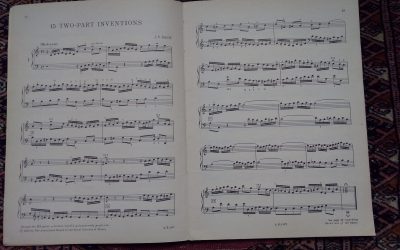
Most people who learn piano will have come across Bach's Two-Part Inventions, but their eyes may not have alighted on his Foreword. Mine hadn't until the other day. 'Forthright instruction, wherewith lovers of the clavier, especially those eager to learn, are shown in...
Exploring the Shelves, 19: Gershwin’s Three Preludes
This is probably the penultimate in my lockdown series about neglected music on my shelves. It has been a helpful focus for me during a phase when more people had time to read. As we start to come out of lockdown, it seems right to wrap it up. I'll try to get to...
Exploring the Shelves, 18: Antonio Soler’s Fandango
Here's a curious piece from the late Baroque, composed by an 18th century Spanish priest who was a contemporary of Scarlatti. Padre Antonio Soler began studying music at his local monastery when he was only six, and by 14 had his first appointment as a cathedral...
Exploring the Shelves, 17: Samuel Coleridge-Taylor’s ‘Petite Suite de Concert’
Recently, at a Zoom meeting of my piano club, one of our members played Samuel Coleridge-Taylor's Petite Suite de Concert. It was new to most of us, but we were all struck by its charm. I remember being puzzled when I first heard of a composer called Samuel Coleridge...